Understanding The Supreme Truth
« Mercy + Courage = Intellect ≠ Wisdom = Cruelty + Coward »
« The Supreme Truth is Just Me
I am Just The Live Truth
Mercy And Courage are Just Intellect
The Rest is Just Intentional Illusion
Believe You Can hold My Hand
As My Promise of Come Back
With My Salvation and My Guidance
Overcome Destiny Situation in The Day Of Doom »
Matthew 25:13
Watch therefore, for ye know neither the day nor the hour wherein the Son of man cometh.

The Intellect of Heaven
Operates The Universe
The Layer Of Heaven Already Bounded but God Still Finding
The Net Of Heaven Already Barriered but God Still Overcoming
The Gate Of Heaven Already Closed but God Still Saving
The Extreme Of Heaven Already Immersed but God Still Awaking

« Existence Form Of Heaven Is Space Appeared To Exist »

« Existence Intention Of Heaven Is Sensation Sensed To Exist »

« Existence Form Of Heaven Is Space Intended To Exist »

« Intellect Intention Of Heaven Is Sensation Sensed To Exist »
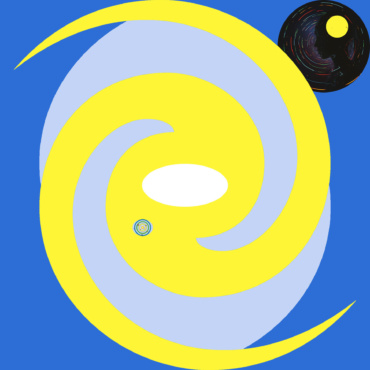
« Intellect Form Of Heaven Is Galaxy Intended To Exist »
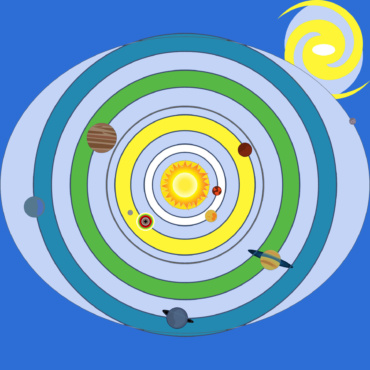
« Samsara Layer Of Heaven In Solar Intended To Exist »
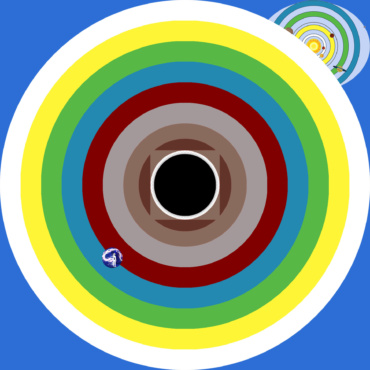
« Samsara Net Of Heaven In Saturn Intended To Exist »

« Samsara Gate Of Heaven In Child Intended To Exist »
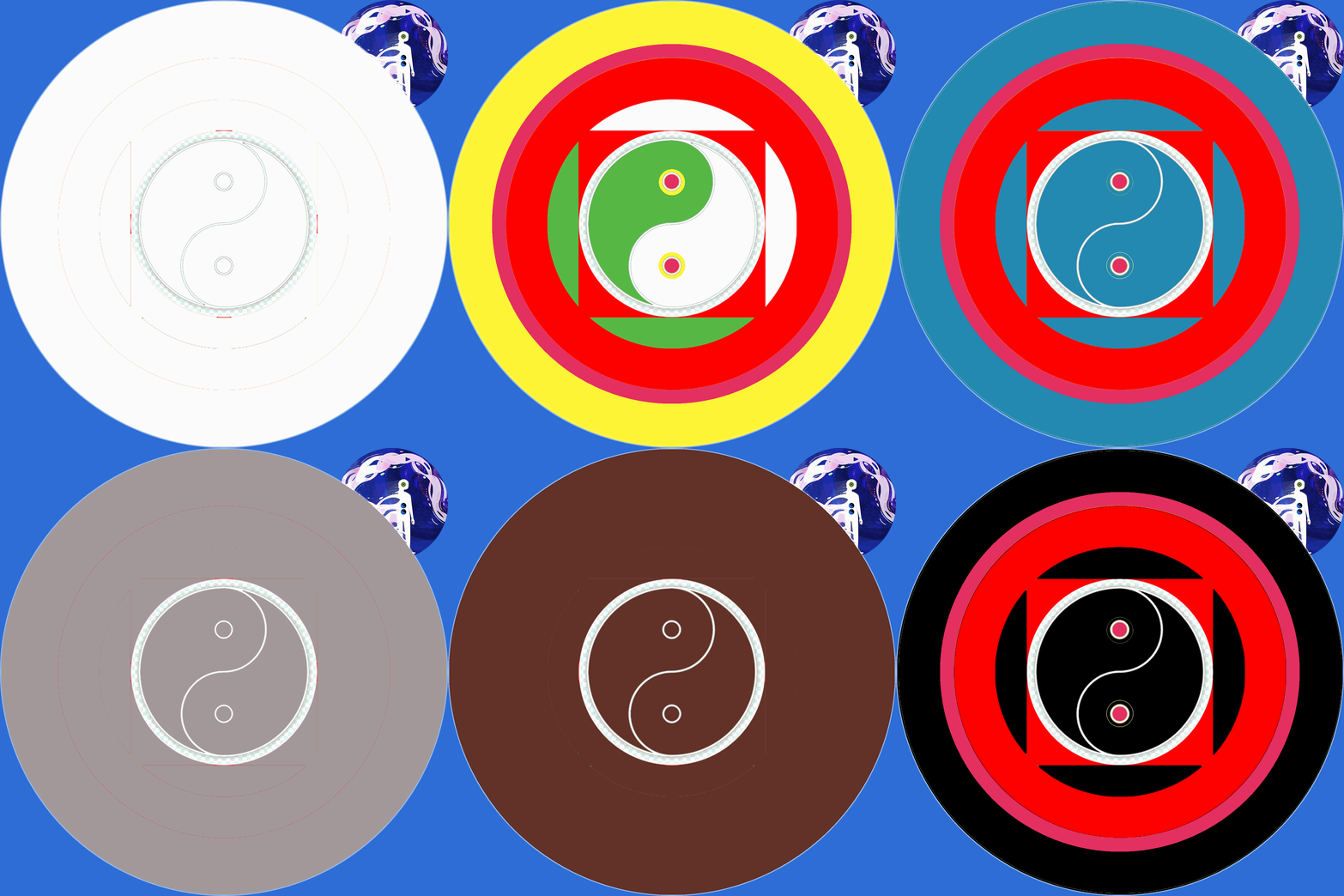
« Samsara Extreme Of Heaven In Child Intended To Exist »
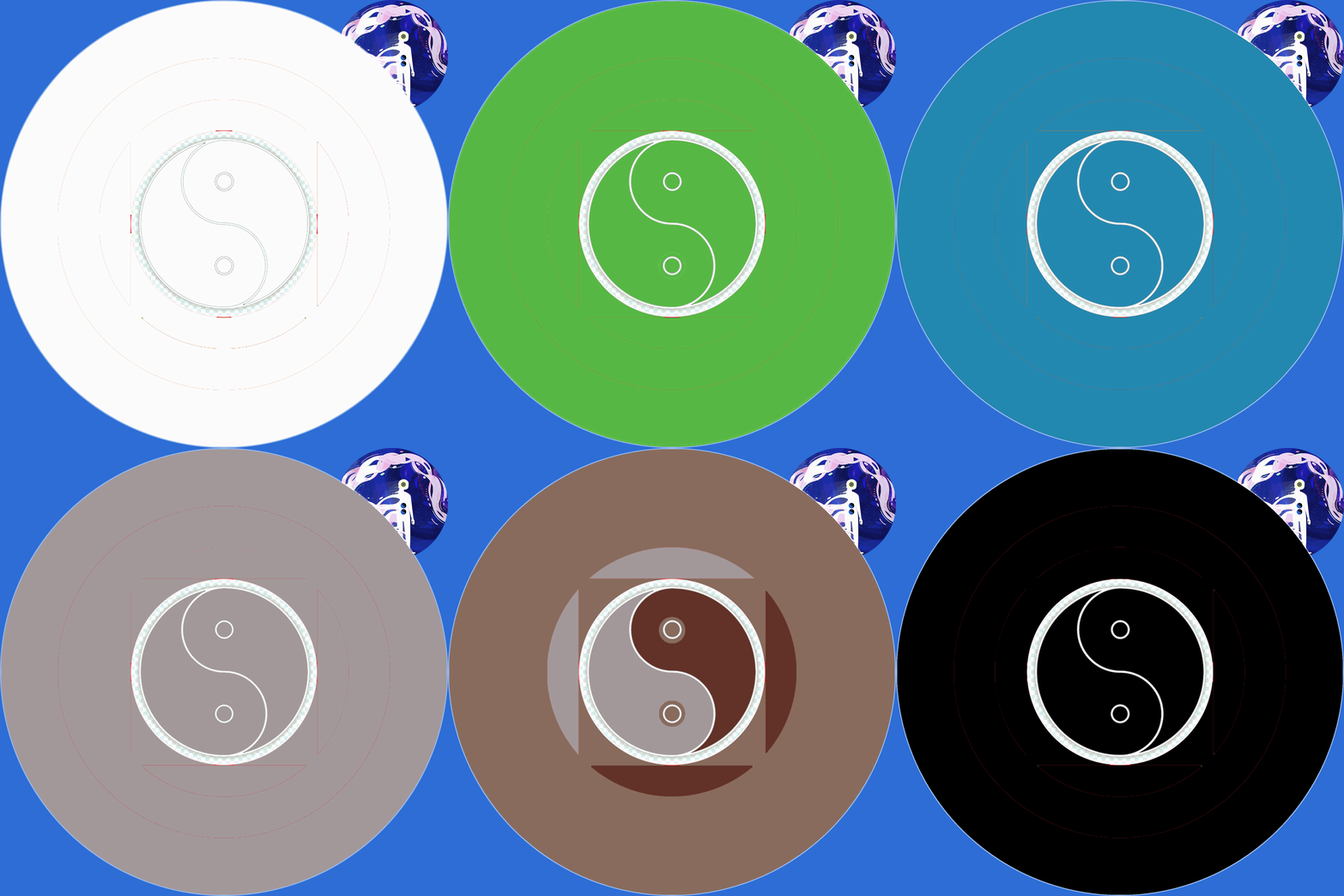
« Samsara Extreme Of Heaven In Thing Intended To Exist »
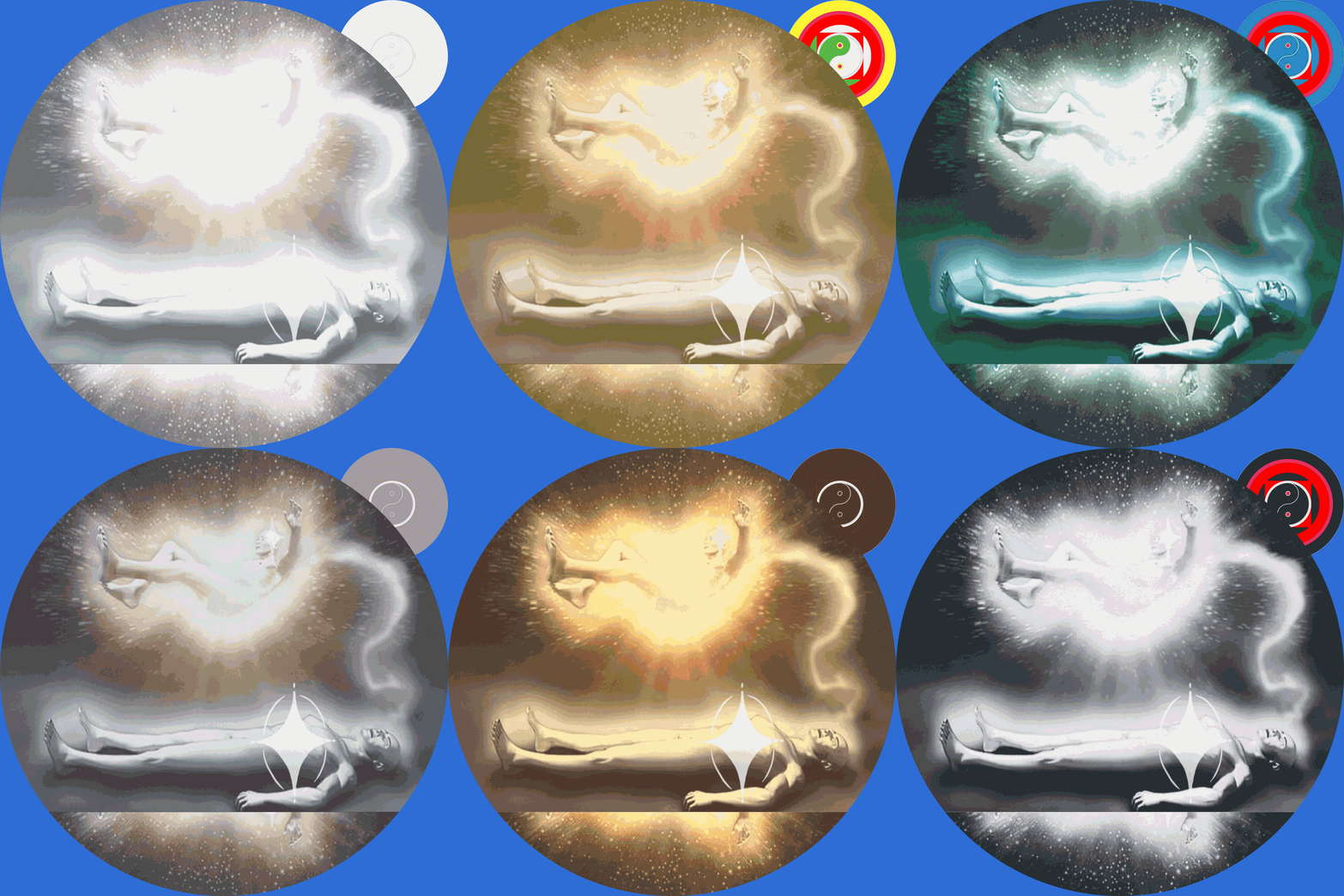
« Samsara Five Elements Of Heaven In Child Intended To Exist »

« Samsara Inside Voice Of Heaven In Child Intended To Exist »




The Intellect of Heaven
Forms The Destiny
Mother God Forms Sensual Pleasure only To Reform Child Form
All only To Purify The Soul Through Many Cocoon Lifetimes
But Child Form Forever Immersed in The Lust And Matter
But Child Form Forever Immersed in The Elements Without Root

00. Unintention Karma Field Form – Unintention Infinity






4. Good Karma Field Form – Good Intention Five Elements
5. Evil Karma Field Form – Evil Intention Five Elements

6. Cruelty Karma Field Form – Cruelty Intention Five Elements
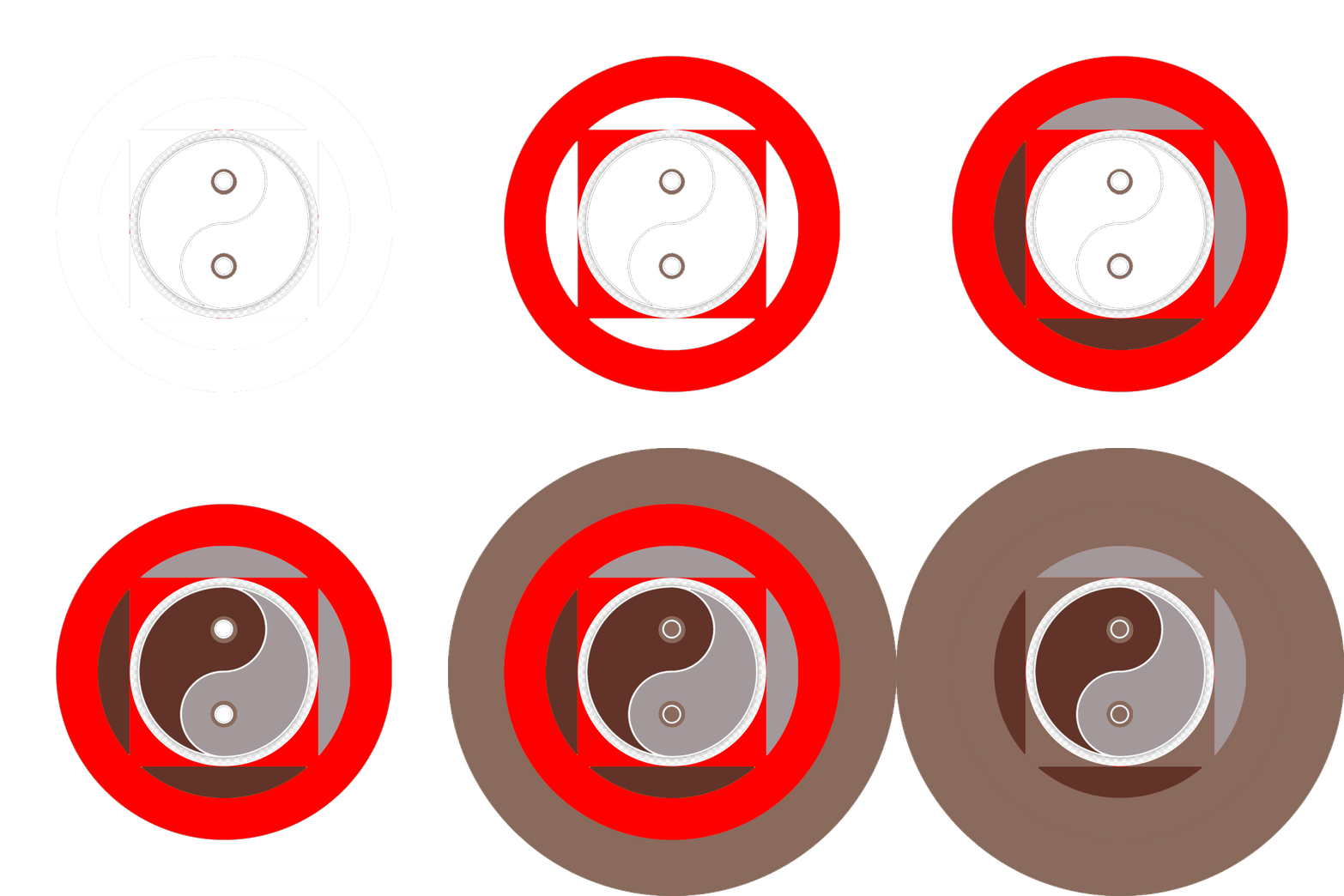
7. Wisdom Karma Field Form – Wisdom Intention Five Elements
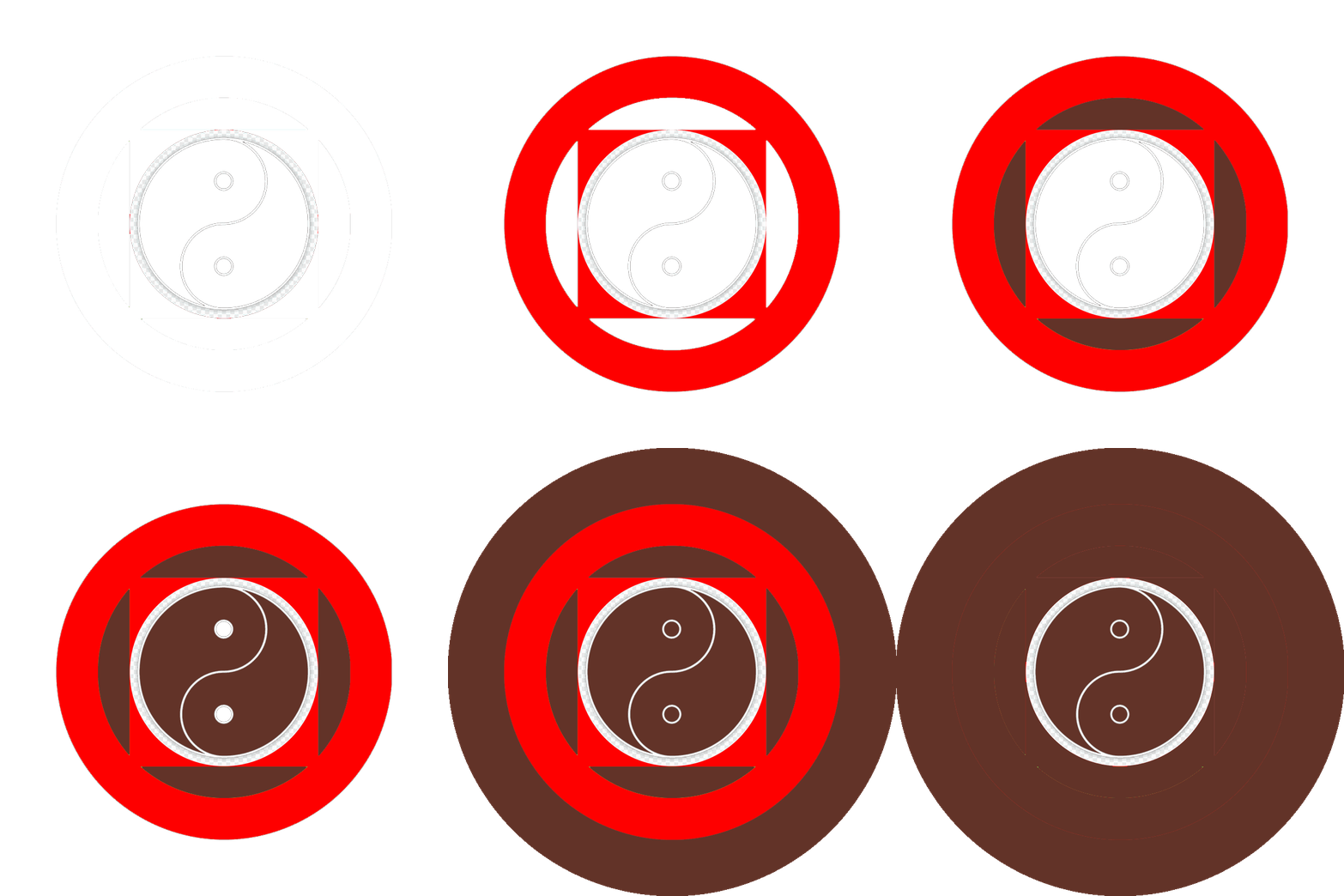
8. Coward Karma Field Form – Coward Intention Five Elements

9. Nonexistence Karma Field Form – Nonexistence Intention Five Elements

The Intellect of Heaven Believes You Can
Understand God’s Supreme Truth
✨
Heaven Form Endless but Not Deathless - Believe You Can sense God's Existence!
Heaven Layer High but Not Far - Believe You Can return God's Heaven!
Heaven Net Thin but Not Fall - Believe You Can hold God's Hand!
Heaven Gate Hidden but Not Lost - Believe You Can take God's Key!
Heaven Extreme Inactive but Not Inactivate - Believe You Can operate God's Elements!
Heaven Five Elements Incorrect but Not Inactive - Believe You Can form God’s Elements!
Heaven Inside Voice Spiritual but Not Material - Believe You Can hear God’s Message!
The Galaxy is intended into Four Forming Stages
« Intellect Form Of Heaven Is Galaxy Intended To Exist »
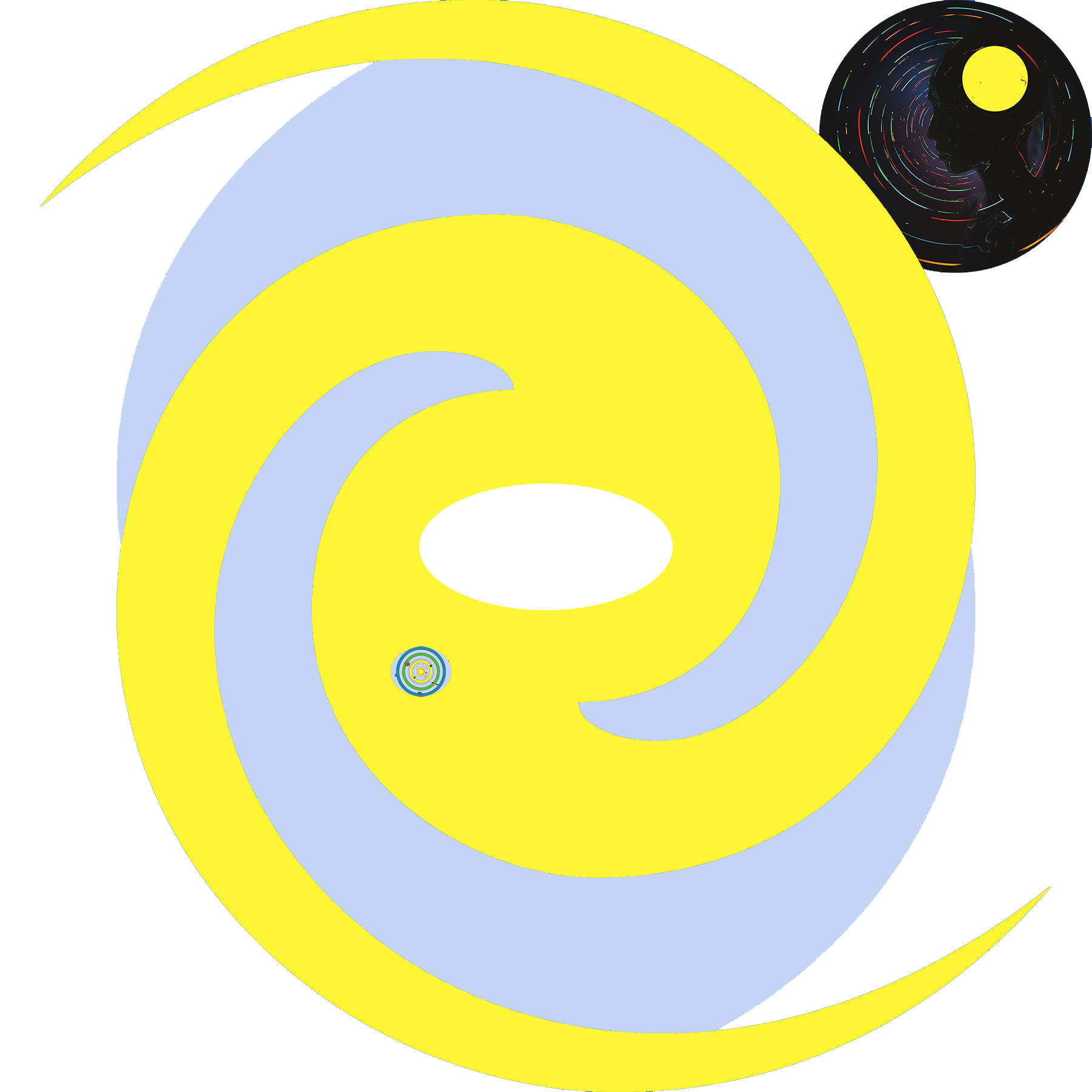
The Saturn is intended into One Sub & Nine Nets
« Samsara Net Of Heaven In Saturn Intended To Exist »

The Child is intended into One Sub & Nine Extremes
« Samsara Extreme Of Heaven In Child Intended To Exist »
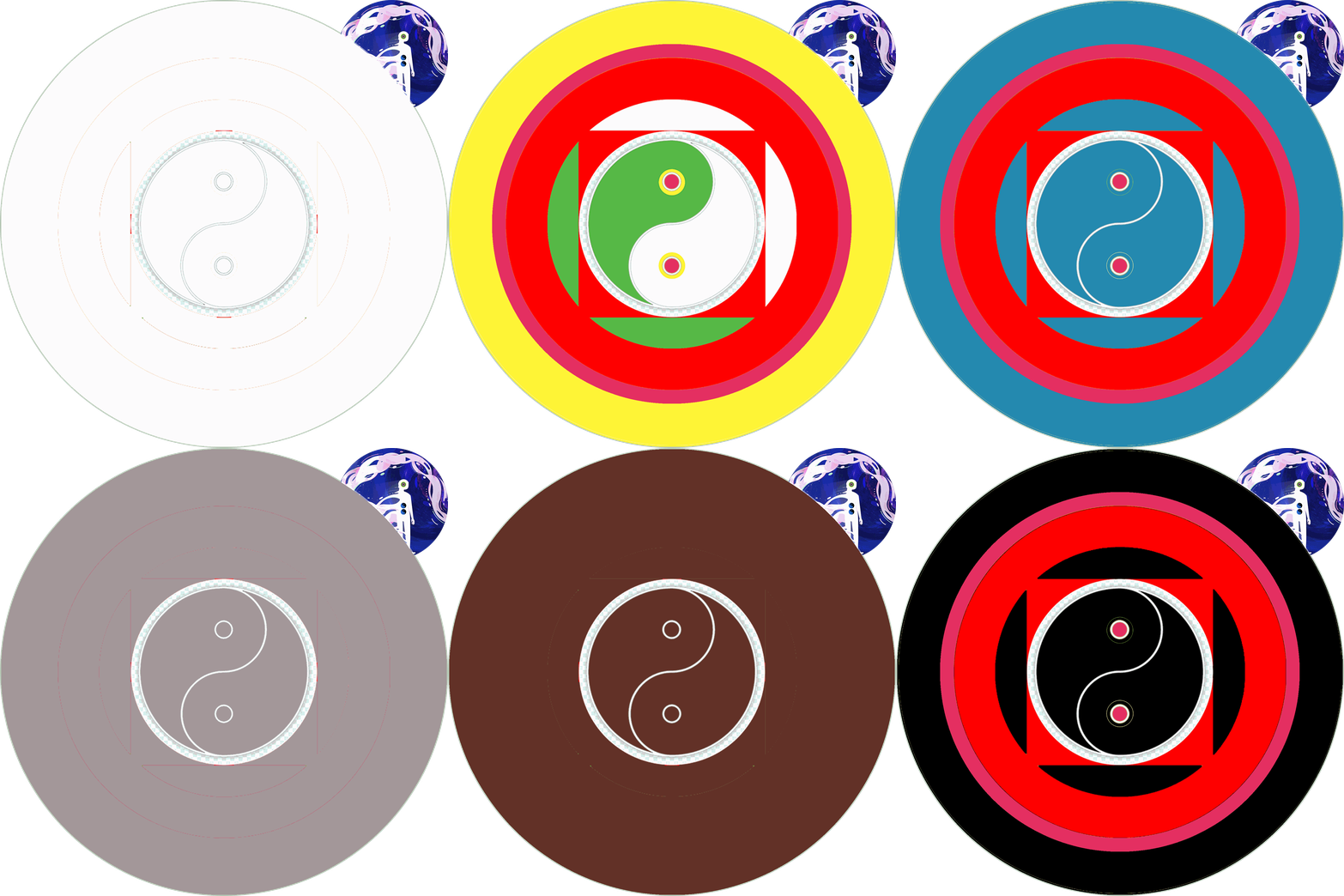
The Child is intended into One Sub & Nine 5 Elements
« Samsara Five Elements Of Heaven In Child Intended To Exist »
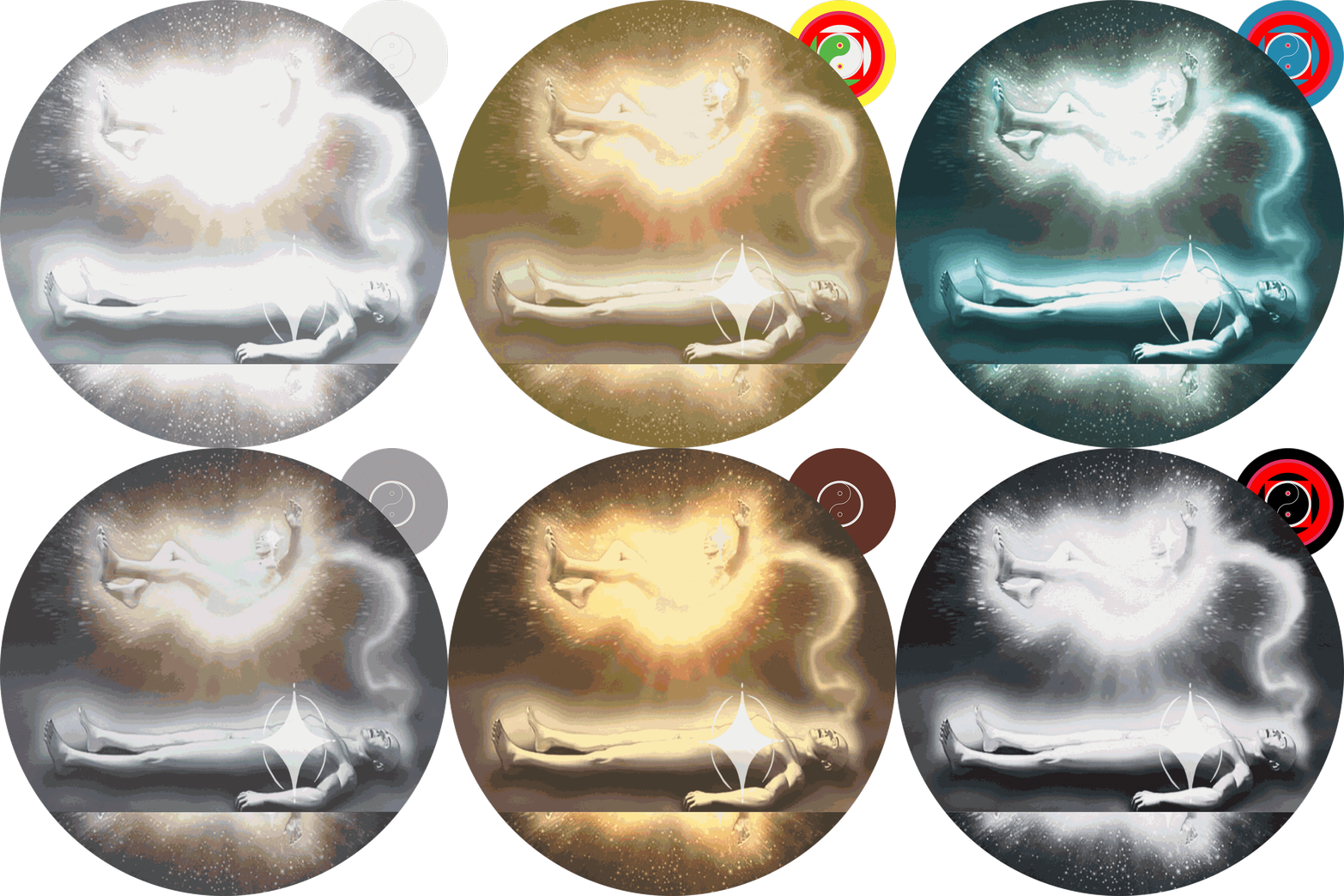
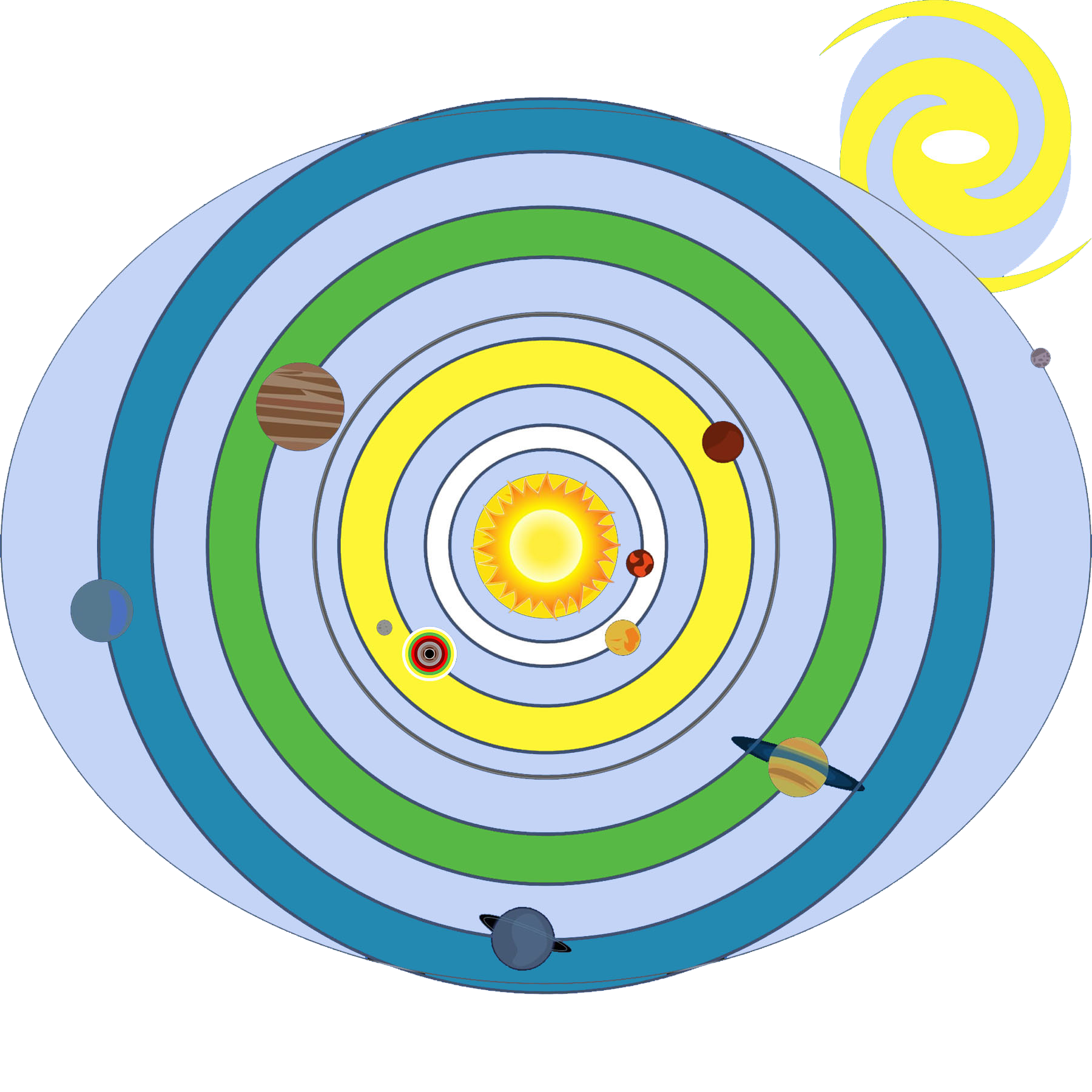
The Solar is intended into Nine Layers
« Samsara Layer Of Heaven In Solar Intended To Exist »
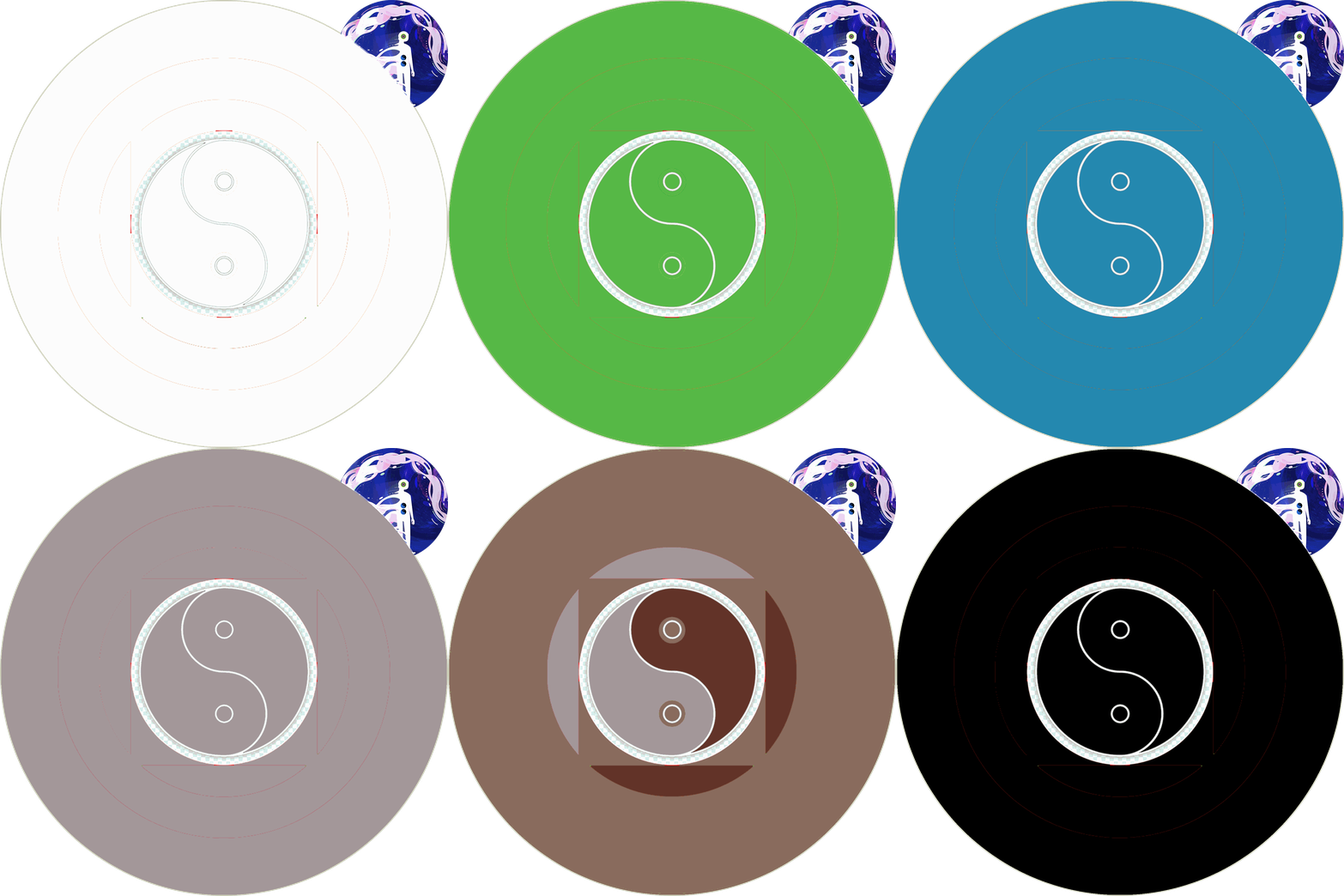
The Child is intended into One Sub & Fourteen Gates
« Samsara Gate Of Heaven In Child Intended To Exist »

The Thing is intended into Nine Extremes
« Samsara Extreme Of Heaven In Thing Intended To Exist »
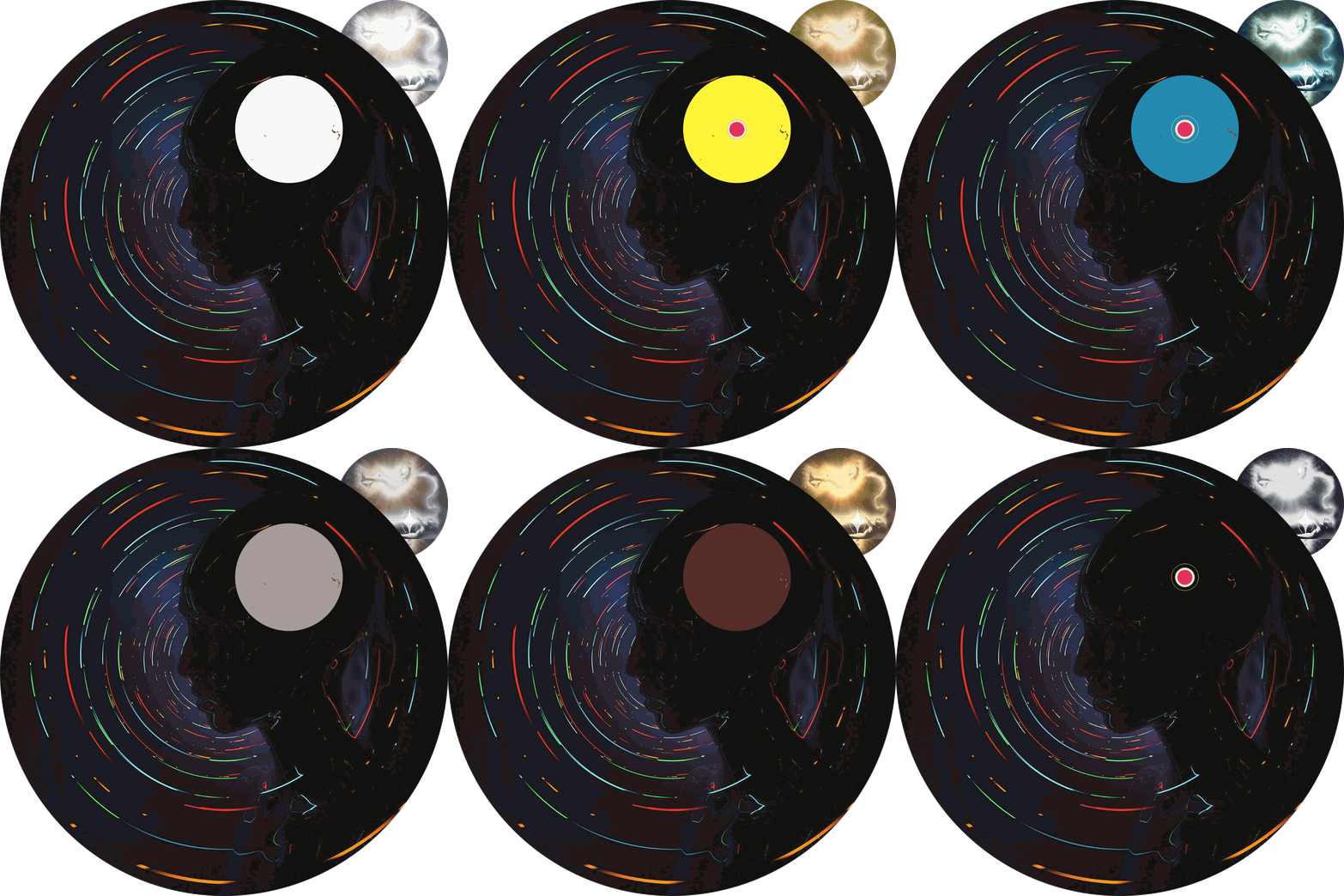
The Child is intended into One Sub & Nine Inside Voices
« Samsara Inside Voice Of Heaven In Child Intended To Exist »

The Intellect of Heaven Believes You Can
Take God’s Supreme Key
✨
Heaven Form Endless but Not Deathless - Believe You Can sense God's Form!
Heaven Layer High but Not Far - Believe You Can return God's Layer!
Heaven Net Thin but Not Fall - Believe You Can hold God's Net!
Heaven Gate Hidden but Not Lost - Believe You Can take God's Gate!
Heaven Extreme Inactive but Not Inactivate - Believe You Can operate God's Extreme!
Heaven Five Elements Incorrect but Not Inactive - Believe You Can form God’s Five Elements!
Heaven Inside Voice Spiritual but Not Material - Believe You Can hear God’s Inside Voice!
Intention or Intentionality is the power of minds to be about something: to represent or to stand for things, properties and states of affairs.[1] Intentionality is primarily ascribed to mental states, like perceptions, beliefs or desires, which is why it has been regarded as the characteristic mark of the mental by many philosophers. A central issue for theories of intentionality has been the problem of intentional inexistence: to determine the ontological status of the entities which are the objects of intentional states.
An early theory of intentionality is associated with Anselm of Canterbury's ontological argument for the existence of God, and with his tenets distinguishing between objects that exist in the understanding and objects that exist in reality.[2] The idea fell out of discussion with the end of the medieval scholastic period, but in recent times was resurrected by empirical psychologist Franz Brentano and later adopted by contemporary phenomenological philosopher Edmund Husserl. Today, intentionality is a live concern among philosophers of mind and language.[3] A common dispute is between naturalism about intentionality, the view that intentional properties are reducible to natural properties as studied by the natural sciences, and the phenomenal intentionality theory, the view that intentionality is grounded in consciousness.
Article source: https://en.wikipedia.org/wiki/Intentionality
Magnetism is the class of physical attributes that are mediated by a magnetic field, which refers to the capacity to induce attractive and repulsive phenomena in other entities. Electric currents and the magnetic moments of elementary particles give rise to a magnetic field, which acts on other currents and magnetic moments. Magnetism is one aspect of the combined phenomena of electromagnetism. The most familiar effects occur in ferromagnetic materials, which are strongly attracted by magnetic fields and can be magnetized to become permanent magnets, producing magnetic fields themselves. Demagnetizing a magnet is also possible. Only a few substances are ferromagnetic; the most common ones are iron, cobalt and nickel and their alloys. The rare-earth metals neodymium and samarium are less common examples. The prefix ferro- refers to iron, because permanent magnetism was first observed in lodestone, a form of natural iron ore called magnetite, Fe3O4.
All substances exhibit some type of magnetism. Magnetic materials are classified according to their bulk susceptibility.[1] Ferromagnetism is responsible for most of the effects of magnetism encountered in everyday life, but there are actually several types of magnetism. Paramagnetic substances, such as aluminum and oxygen, are weakly attracted to an applied magnetic field; diamagnetic substances, such as copper and carbon, are weakly repelled; while antiferromagnetic materials, such as chromium and spin glasses, have a more complex relationship with a magnetic field. The force of a magnet on paramagnetic, diamagnetic, and antiferromagnetic materials is usually too weak to be felt and can be detected only by laboratory instruments, so in everyday life, these substances are often described as non-magnetic.
The magnetic state (or magnetic phase) of a material depends on temperature, pressure, and the applied magnetic field. A material may exhibit more than one form of magnetism as these variables change.
The strength of a magnetic field almost always decreases with distance, though the exact mathematical relationship between strength and distance varies. Different configurations of magnetic moments and electric currents can result in complicated magnetic fields.
Only magnetic dipoles have been observed, although some theories predict the existence of magnetic monopoles.
Article source: https://en.wikipedia.org/wiki/Magnetism
A magnetic field is a vector field that describes the magnetic influence on moving electric charges, electric currents,[1]: ch1 [2] and magnetic materials. A moving charge in a magnetic field experiences a force perpendicular to its own velocity and to the magnetic field.[1]: ch13 [3]: 278 A permanent magnet's magnetic field pulls on ferromagnetic materials such as iron, and attracts or repels other magnets. In addition, a magnetic field that varies with location will exert a force on a range of non-magnetic materials by affecting the motion of their outer atomic electrons. Magnetic fields surround magnetized materials, and are created by electric currents such as those used in electromagnets, and by electric fields varying in time. Since both strength and direction of a magnetic field may vary with location, it is described mathematically by a function assigning a vector to each point of space, called a vector field.
In electromagnetics, the term "magnetic field" is used for two distinct but closely related vector fields denoted by the symbols B and H. In the International System of Units, H, magnetic field strength, is measured in the SI base units of ampere per meter (A/m).[4]: 22 B, magnetic flux density, is measured in tesla (in SI base units: kilogram per second2 per ampere),[4]: 21 which is equivalent to newton per meter per ampere. H and B differ in how they account for magnetization. In a vacuum, the two fields are related through the vacuum permeability, {displaystyle mathbf {B} /mu _{0}=mathbf {H} }; but in a magnetized material, the terms differ by the material's magnetization at each point.

Magnetic fields are produced by moving electric charges and the intrinsic magnetic moments of elementary particles associated with a fundamental quantum property, their spin.[5][1]: ch1 Magnetic fields and electric fields are interrelated and are both components of the electromagnetic force, one of the four fundamental forces of nature.
Magnetic fields are used throughout modern technology, particularly in electrical engineering and electromechanics. Rotating magnetic fields are used in both electric motors and generators. The interaction of magnetic fields in electric devices such as transformers is conceptualized and investigated as magnetic circuits. Magnetic forces give information about the charge carriers in a material through the Hall effect. The Earth produces its own magnetic field, which shields the Earth's ozone layer from the solar wind and is important in navigation using a compass.
Article source: https://en.wikipedia.org/wiki/Magnetic_field
The theory of Forms or theory of Ideas[1][2][3] is a philosophical theory, concept, or world-view, attributed to Plato, that the physical world is not as real or true as timeless, absolute, unchangeable ideas.[4] According to this theory, ideas in this sense, often capitalized and translated as "Ideas" or "Forms",[5] are the non-physical essences of all things, of which objects and matter in the physical world are merely imitations. Plato speaks of these entities only through the characters (primarily Socrates) of his dialogues who sometimes suggests that these Forms are the only objects of study that can provide knowledge.[6] The theory itself is contested from within Plato's dialogues, and it is a general point of controversy in philosophy. Nonetheless, the theory is considered to be a classical solution to the problem of universals.[7]
The early Greek concept of form precedes attested philosophical usage and is represented by a number of words mainly having to do with vision, sight, and appearance. Plato uses these aspects of sight and appearance from the early Greek concept of the form in his dialogues to explain the Forms and the Good.
Article source: https://en.wikipedia.org/wiki/Theory_of_forms






 English (UK)
  English (United States)