Lee esta historia en español aquí.
NASA-supported scientists have discovered an organism that lives at extreme temperatures previously thought impossible for complex life. High temperatures can cause the destruction of necessary cell components, which is a big problem for cells with complex parts like a nucleus encasing delicate genetic information.
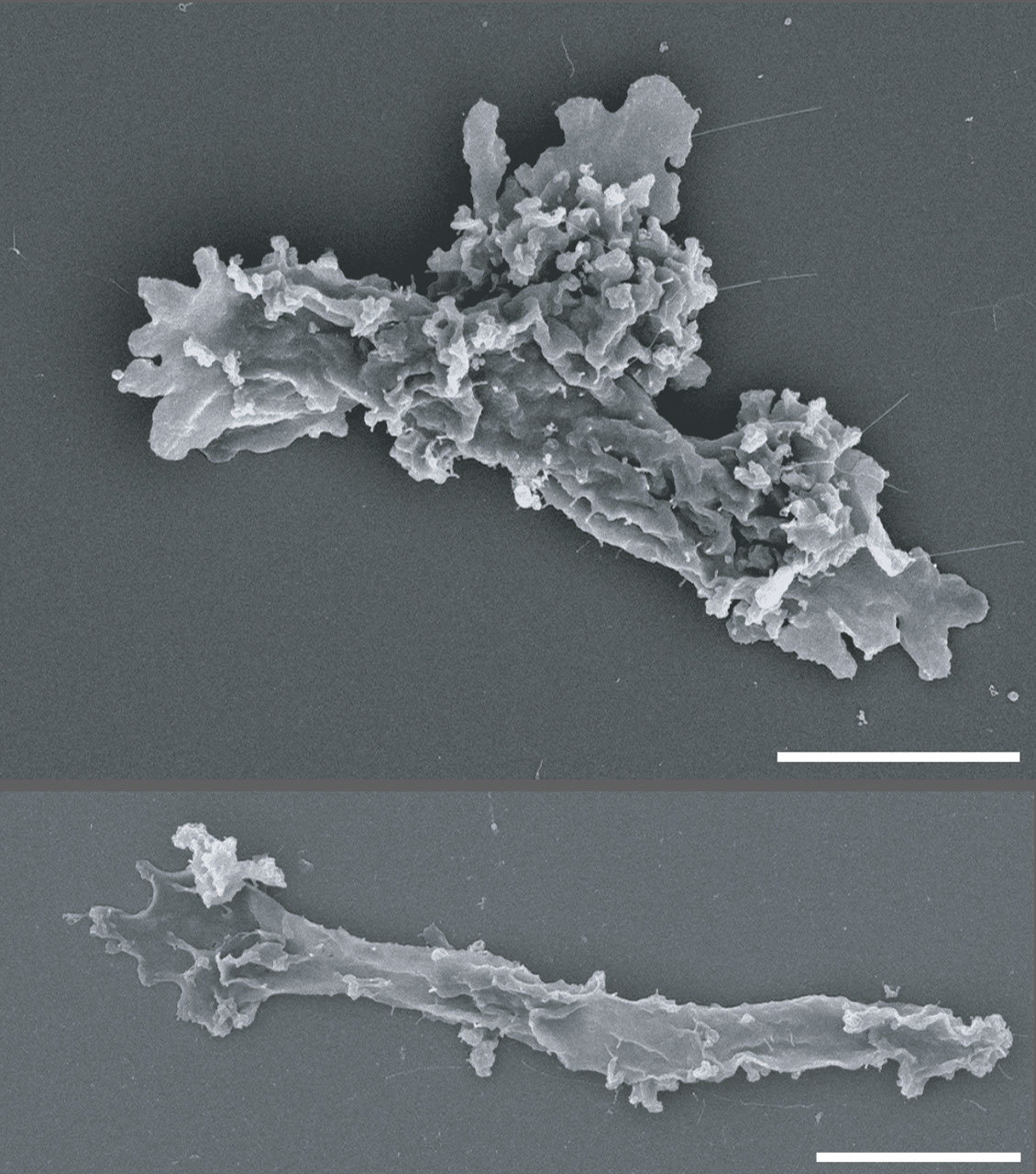
In the heated waters of California’s Lassen Volcanic National Park, a team of scientists observed an amoeba that can reproduce by division at an astonishing 145 degrees Fahrenheit (63 degree Celsius), setting a record for the upper temperature limit for all known eukaryotes. Incendiamoeba cascadensis, also dubbed the fire amoeba, stops reproducing above 145 degrees Fahrenheit but is still active, moving around to search for food at up to 147 degrees Fahrenheit (64 Celsius). The previous limit of 140 degrees Fahrenheit (60 Celsius) for eukaryotes was set by a few species of fungi and red algae. The results were published on Tuesday in the journal Cell.
Astrobiologists have long studied the boundaries of life’s survival on Earth to determine how organisms might live on other worlds like Mars where conditions are less hospitable than our home planet. Organisms that endure at the edges of habitability under extreme temperature, pH levels, radiation, and other environmental conditions are known as extremophiles. Studying them helps scientists understand what life as we know it is capable of. Extremophiles also produce unique proteins that can have promising uses in biotechnology, from industrial applications to medicine.
Previous extremophile research has mostly focused on single-celled bacteria and archaea. The new study shows that the more complex cells of eukaryotes might be more durable than previously thought and could even help scientists understand locations in the universe where complex life could survive.
Life on Earth is broadly divided into two categories, prokaryotes and eukaryotes. Prokaryotes are single-cell organisms that do not have a nucleus or membrane-bound organelles inside their single cell. This means that they have less cellular ‘machinery’ that can be damaged by extremes, such as blistering heat, bitter cold, caustic acidity, or damaging radiation.
Organisms that live in extreme heat are known as thermophiles. To be a true ‘heat-loving’ thermophile, the organism must be able to replicate, move, eat, and survive above 113 degrees Fahrenheit (45 degrees Celsius).
Prokaryotes include bacteria and archaea, with archaea being particularly adept at surviving extremes. Because of their relative simplicity, scientists also believe that prokaryotes were the first forms of life to appear on Earth, billions of years ago when the environment of our planet was much more inhospitable than it is today.
Eukaryotes are more complicated organisms that are thought to have evolved later in the history of life on Earth. These organisms have a separate cell nucleus inside their cells that contains fragile genetic information. Eukaryotes also contain membrane-bound organelles, such as mitochondria and endoplasmic reticulum. These organelles are like mini cellular machines that perform specific functions. Eukaryotes include a wide span of life, from single-celled algae to multicellular organisms like plants and human beings.
High temperatures lead to the breakdown of proteins and other biomolecules that living cells need to function. Heat also can cause membranes to break apart, thereby destroying cells. It has been suggested that organelle membranes in eukaryotes could not remain stable above 144 degrees Fahrenheit (62 degrees Celsius). The discovery of I. cascadensis proves that assumption wrong.
“In part, studies on eukaryotes may have been limited because of assumptions about membrane stability,” says Beryl Rappaport, graduate student at Syracuse University and lead author of the study. “We are hoping that the discovery of I. cascadensis encourages others to keep searching for high temperature eukaryotes.”
The team sequenced the I. cascadensis genome, studying the expression of genes at multiple temperatures. They found many genes that help the amoeba stabilize DNA and protect it from breaking down. Other genes allow the organisms to sense the external environment. At high temperatures, the expression of certain genes also increased, including those involved in maintaining protein folding.
“We were able to uncover many strategies that could help I. cascadensis survive at high temperatures, and some of these strategies could be used by thermophiles across all life,” says Rappaport. “For instance, some proteins in I. cascadensis have a high positive surface charge that could help them remain stable. These protein charges are similar to those found in thermophilic bacteria and archaea.”
The team also compared genetic information from other studies world-wide. In this trove of data, they found similar pieces of DNA from geothermal samples in places like New Zealand and Yellowstone National Park. This means that additional thermophilic amoebas related to I. cascadensis might be living all around the globe just waiting to be discovered.
Earth is the only planet we know of that is inhabited with life. For life as we know it to survive on other planets in the solar system or beyond, organisms might have to cope with environmental conditions that are very different from those found here at home.
“Studying extremophiles helps us better understand the biochemical and physiological limitations of life as we know it on Earth,” says Alison Olcott, program scientist for Exobiology at NASA Headquarters in Washington. “This information, in turn, helps guide NASA’s search for life as it expands the range of conditions we think life could potentially be inhabiting elsewhere.”
In particular, the study increases our understanding of where and how life with complex cells might persist on Earth and beyond.
“Finding eukaryotes surviving in high temperature environments not only expands our understanding of where life could be found, but also of how complex that life could be,” says Olcott.
However, the researchers do point out that survival depends on many factors that are part of a larger ecosystem.
“It could certainly be possible for complex life like I. cascadensis to survive on another planet, but Earth is the only planet we currently know of to have all the requirements for I. cascadensis to be happy,” says Rappaport. “It’s not just about temperature. An environment also needs the right acidity, oxygen levels, pressure, water, and food. I. cascadensis could not survive on its own. It needs other life to be supported as well.”
For more information on astrobiology at NASA, visit:


 English (United States)
  English (UK)